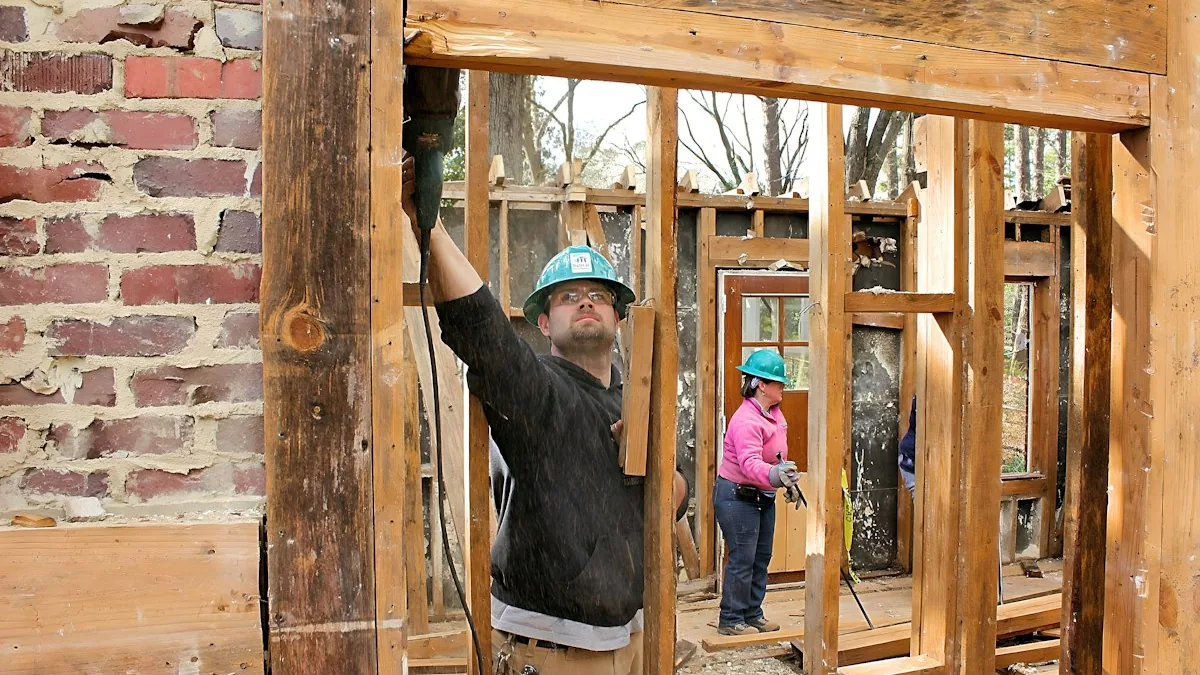
- Design a property-specific remote verification plan.
- Commission independent site evidence and record its limits.
- Reconcile parcel, condition, occupancy, and cost discrepancies.
- Model the cash effect of unresolved remote risks.
- Use a documented stop, investigate, or proceed decision.
Replace a virtual tour with a verification plan
Remote acquisition changes who observes the property; it does not reduce the number of questions the investment must answer. A seller’s video may show attractive rooms while omitting the crawl space, drainage pattern, or occupied addition. Begin with a decision sheet listing the proposed use, expected holding period, cash limit, and latest decision date. For each material assumption, identify the evidence needed and the qualified person who can obtain it locally. All amounts and properties in this guide are hypothetical teaching examples, not academy transactions or local price estimates.
Organize the investigation around five questions: Is this the correct property? Does the purported seller have verified authority? What physical and operational conditions exist? Can the intended project be carried out? What cash and time would unresolved conditions consume? These questions require different specialists and records. A photographer cannot resolve ownership authority, and a title review cannot tell you whether a heating system works. The file should show who answered each question, the date, the supporting document, and any limitation.
Assign one coordinator to track access permissions, delivery dates, and unanswered requests. That person should not quietly substitute their judgment for an engineer, inspector, attorney, or insurer. Give each specialist a written scope and ask what their work excludes. Set the investigation sequence so an inexpensive identity or use problem can stop an unsuitable project before you spend heavily on detailed construction pricing. Confirm contractual rights and deadlines with the appropriate professional before assuming more investigation time is available.
Set a separate diligence spending authorization so remote convenience does not turn into uncontrolled vendor orders. For example, the coordinator might be permitted to commission an agreed inspection package only after parcel and seller-authority questions reach the professional review stage. Additional specialist work should identify the question it will answer and how the answer could change price, scope, timing, or willingness to proceed. Keep invoices for rejected properties in the business sourcing records rather than hiding them inside the next successful project. If a report arrives too late to affect a decision, record that scheduling failure. If two reports conflict, commission a focused resolution instead of simply choosing the cheaper interpretation. This process gives each investigation a purpose and preserves the distinction between spending more on evidence and actually resolving the uncertainty that matters.
Establish parcel identity and seller authority separately
Create an identity crosswalk between the advertised address, parcel identifier, legal description, tax record, and the documents your closing professional reviews. Mailing addresses, tax descriptions, and online map pins can disagree. If the sale includes an adjoining lot, detached garage, shared driveway, or utility connection, identify exactly what is included. Ask the title or legal professional which records and surveys are needed to establish boundaries, interests, access rights, and exceptions. An attractive aerial image does not establish any of those legal conclusions.
Verify the seller and signing authority through the closing professional’s approved process. Public information showing an owner’s name does not prove that the person emailing you is that owner. The FBI’s parcel impersonation warning illustrates why public property facts can be reused by fraudsters. Treat urgency, inconsistent answers, or unusual payment instructions as reasons to pause and investigate through trusted channels. Do not attempt to authenticate sensitive identification documents by circulating them through a broad acquisition group.
Keep the verification result distinct from the documents themselves. Your working file might state that counsel or the title company confirmed the required authority evidence on a specified date, while restricted records remain with the professional. If a trust, estate, entity, or agent is involved, ask who can approve the transaction and which approvals remain outstanding. Do not infer authority from a business card or an electronic signature. A remote process should make exceptions more visible because you have fewer informal observations to detect inconsistencies.
Commission evidence that can be located and challenged
Give the local observer a shot list organized by location: street approach, building elevations, roof observations from safe accessible positions, each interior room, mechanical equipment labels, utility areas, and visible problem locations. Request original files with capture dates and a room index, rather than a polished promotional montage. A continuous orientation video can connect the street number to interior rooms, but it still does not establish hidden condition. Require permission for entry and photography, and protect occupants’ personal belongings and information in shared materials.
Use an independent inspector accountable to you for the physical assessment. CFPB guidance distinguishes an inspection from an appraisal; a valuation opinion should not be treated as a substitute condition report. Ask about utilities being on, inaccessible areas, weather limitations, and specialist follow-up. A report stating that plumbing was not operated is an unresolved item, not confirmation that plumbing is serviceable. Review the report with the inspector while photographs are available, and record the specific questions that their scope cannot answer.
Build an observation log with one row per material issue. Include a photo reference, the observer’s exact description, the proposed explanation, the verification method, and the financial consequence if the explanation is wrong. For example, a ceiling stain can support the observation of discoloration but cannot by itself prove that a roof leak is repaired. A qualified contractor’s investigation, supporting records, and suitable testing may change the assessment. Keep competing explanations open until evidence supports closing them; remote confidence should follow corroboration.
Investigate the neighborhood without making assumptions about people
Remote neighborhood diligence should focus on the asset and its intended operation: competing properties, transportation access, nearby incompatible land uses, recorded restrictions, infrastructure, drainage, and service availability. Ask a qualified local professional to explain which comparable sales or rentals actually compete with this property. Avoid substituting a demographic stereotype for transaction evidence. A neighborhood’s appearance in a drive-through video does not establish future rent, buyer demand, property safety, or the suitability of an individual household.
Research property-specific hazard and environmental questions with appropriate sources and professionals. Screening maps can identify questions, but they are not complete site investigations. EPA expressly warns that its radon zone map does not determine whether an individual home needs testing. Apply the same distinction between screening and verification when considering drainage, past water entry, or other environmental concerns. Ask the insurer about the intended vacancy, renovation, occupancy, and use before placing a premium estimate into the acquisition model.
Confirm services that your project assumes: water and sewer connection, electric capacity, waste removal, internet where relevant, and access for deliveries or emergency work. Identify who supplied the information and whether it applies to the specific parcel. A nearby building receiving service is not proof this property has the same connection or capacity. If the plan depends on a change in use or substantial renovation, ask local officials and qualified advisers about required processes. Record unresolved approvals as dependencies rather than treating them as completed facts.
Translate condition evidence into a comparable scope
Two remote bids can differ because contractors priced different jobs. Issue the same written scope with quantities, finish expectations, demolition, disposal, permit assumptions, and exclusions. Ask bidders to identify whether measurements were field verified and what investigation remains necessary. Preserve the original version and any clarifications so a later revision can be traced. A contractor who cannot price an inaccessible area should give a stated limitation or investigation proposal rather than a number that looks precise without supporting evidence.
Suppose a hypothetical project has a $145,000 purchase price, $5,000 acquisition costs, $32,000 defined rehabilitation scope, $8,000 contingency, $9,000 carrying and financing costs, and $17,000 selling costs. The modeled total is $216,000. At an illustrative $240,000 resale, the spread is $24,000 before taxes, owner labor, overhead, and omitted costs. These figures provide a decision framework only. The remote file should identify which portions of the $32,000 were measured and which assumptions could change the scope.
Now suppose inaccessible subfloor damage adds $9,000 of work and delays completion by two months at $1,600 monthly carrying cost. Total additional cost is $12,200 and the spread falls to $11,800 at the same sale price. If a $6,000 sale-price reduction also occurs, the spread becomes $5,800. Do not automatically assume the original contingency absorbs every issue while also remaining available for other uncertainties. Update the actual scope, contingency balance, schedule, and resulting decision together.
Map the logistics and the lowest cash balance
Remote work introduces cash timing that an annual project total hides. Contractors may require a lawful, negotiated deposit; specialists charge before purchase; a lender may reimburse work only after inspection; and someone must secure or maintain the property between visits. Build a weekly schedule showing payments and confirmed funding. Distinguish cash in your account from approved but undisbursed loan proceeds. A reimbursement request is not spendable money until the required conditions are met and the money is available.
For example, assume a $14,000 initial unrestricted project balance after closing, a $10,000 rehabilitation payment due in week one, and a $7,000 reimbursement expected in week three. Week two also requires $3,000 for other work and $2,000 of carrying costs. Before reimbursement, the projected balance is negative $1,000: $14,000 less $10,000 less $3,000 less $2,000. The eventual reimbursement does not cure that earlier payment shortfall. Revise the payment schedule, secure documented liquidity, or reconsider the commitment.
Name a local response contact and backup for security problems, utility failures, or access coordination. Define what they may authorize, the spending limit, and when professional help or owner approval is needed. Do not give a vendor broad payment authority simply because they are nearby. Confirm invoice details through established channels, and independently verify payment instructions using contact information already authenticated. Build the cost of these ordinary controls into the operating plan instead of calling every predictable remote expense an emergency.
Use decision gates that preserve unresolved facts
A useful remote decision gate contains a conclusion and its evidence, rather than a checklist full of unexplained ticks. Before proceeding, reconcile parcel identity, authority, inspections, intended use, scope, insurance, budget, access, and funding. Mark each as verified for the stated purpose, unresolved with a consequence, or unacceptable under your investment criteria. Do not average several small verified items into a high confidence score that obscures one potentially fatal title, structural, or funding issue.
Set a stop date earlier than the relevant contractual deadline so professionals have time to explain available options. If inspection access is denied, the answer is not to assume the inaccessible area resembles the photographed rooms. Assess whether more time, permitted access, revised terms, or withdrawal is appropriate under the actual contract and professional advice. Document any accepted uncertainty in dollar and timing terms where possible, including the evidence that would cause you to reopen the decision.
The actionable takeaway is to build one decision packet that another reviewer can follow without speaking to every vendor. Include the parcel crosswalk, professional verification results, indexed images, reports, scope comparisons, cash schedule, unresolved-item register, and decision owner. After a completed or rejected acquisition, compare what the remote file predicted with what later investigation found. Improve the next shot list or scope based on specific misses. A repeatable remote operation learns from discrepancies instead of relying on increasingly confident video presentations.
- Match address, parcel, legal description, and included improvements.
- Obtain professional identity and authority verification.
- Index independent inspection evidence and inaccessible areas.
- Reconcile equivalent rehabilitation scopes and exclusions.
- Model delay costs and cash needed before draws.
- Assign a decision owner and resolve deadline-sensitive exceptions.
Keep the evidence close.
Primary consumer guidance on independent inspections and distinguishing inspections from appraisals; investment-property procedures and contracts require separate review. Checked 2026-10-27 (America/Chicago).
Reference checked October 27, 2026.Primary explanation of regional screening limits; a radon zone map does not determine an individual property’s testing need. Checked 2026-10-27 (America/Chicago).
Reference checked October 27, 2026.Primary warning about property-owner impersonation and suspicious payment or communication patterns; contextual fraud guidance, not a substitute for professional identity and title verification. Checked 2026-10-27 (America/Chicago).
Reference checked October 27, 2026.Primary business guidance on collecting only necessary information, access controls, retention, and incident preparation; not a transaction-specific legal opinion. Checked 2026-10-27 (America/Chicago).
Reference checked October 27, 2026.General U.S. education. All numerical examples are hypothetical and exclude costs unless expressly included. This is not individualized financial, investment, tax, or legal advice. Verify property-specific facts and consult qualified professionals. Next editorial review: 2027-01-27.