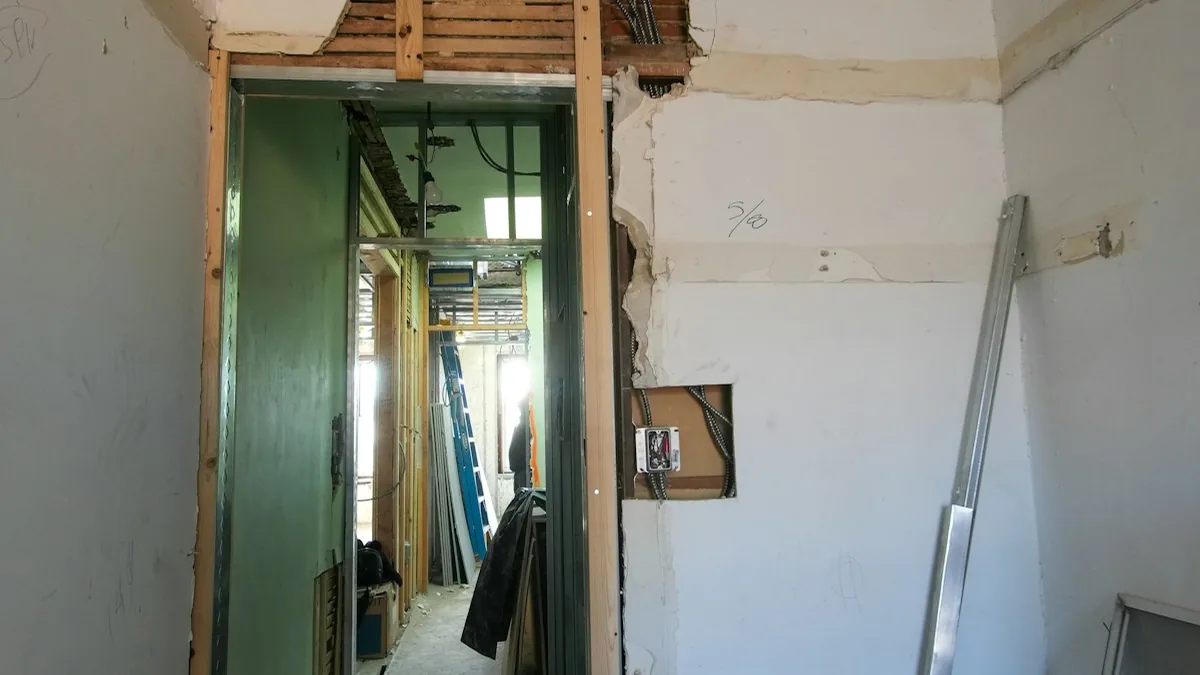
Original AI-generated editorial illustration · Deal Analysis
UNDERSTAND THE WHOLE SUBJECT
Deal Analysis & Real Estate Mathematics
Deal analysis connects evidence, economics, time, and uncertainty. Its purpose is not to produce the largest projected return or a spreadsheet that approves every property. Its purpose is to show what must be true, how much cash is exposed, which facts could change the conclusion, and whether the opportunity fits the investor making the decision.
This collection treats underwriting as a repeatable investigation. Individual guides examine comparable sales, renovation scopes, and detailed arithmetic; this handbook explains how those pieces belong together. You will learn to structure the model, choose the next diligence task, compare competing uses of capital, and record a clear proceed, revise, or pass decision.
A practical framework for turning a promising property into a defensible decision—with a complete worked example, the costs people miss, and a margin for uncertainty.
Build a budget from quantities, scope boundaries, sequencing, and cash timing rather than a single optimistic estimate.
Beginner9 min read
A DEEPER EXPLANATION
Read the subject. Understand the decisions.
Follow the concepts from first principles to a practical working process. All scenarios are illustrative; verify facts and professional requirements for your own circumstances.
Define the investment question before entering numbers
Begin with a specific proposition: acquire this property, perform this work, hold for this period, and pursue this primary exit using this capital structure. Add the constraints that matter to you, such as available cash, management time, concentration, and maximum acceptable loss. Without those boundaries, analysis becomes a search for a scenario that looks profitable rather than an evaluation of a real choice.
Use an investment thesis that can be disproved. For example, the property may offer value because documented repairs can improve an obsolete but otherwise functional home within a particular budget. State what would invalidate that thesis: structural work outside the budget, unsupported resale evidence, or an exit window beyond the financing term. A useful thesis directs diligence toward decisive facts. It also makes passing easier when the facts contradict the initial attraction.
Keep four economic layers separate
The first layer is the asset: price, use, condition, income potential, and physical obligations. The second is the project plan: acquisition costs, rehabilitation, stabilization, holding period, and disposition. The third is financing: proceeds, fees, draws, interest, repayment, and covenants. The fourth is the investor: actual cash contributed, distributions, retained reserves, time, and concentration. Changes in one layer often affect the others, but the model should show where they originate.
For a rental, distinguish net operating income from debt service and separately identified replacement reserves. For a resale, distinguish project spread from business profit after acquisition overhead and owner labor. For every return ratio, define the numerator, denominator, and period. A percentage without those definitions invites misleading comparisons. A highly leveraged deal can show an impressive equity return while exposing the investor to a cash shortfall that the percentage does not describe.
Build an evidence register instead of hiding assumptions
Every material input should identify its source, reliability, date or applicable period, and verification owner. An executed lease, a seller's recollection, a contractor's preliminary walk-through, and a binding quote represent different evidence. Label them accordingly. Store ranges where uncertainty is real, and preserve the original input when a later finding changes it. Precision in formatting does not improve the underlying evidence.
Create an assumptions register with three categories: verified, reasonably estimated, and unresolved. Focus attention on estimates that have large consequences. An uncertain annual utility expense may matter less than an uncertain foundation scope, although the answer depends on the deal. Ask what new information would change your action. This turns diligence from an unlimited research exercise into a sequence of targeted efforts to reduce decision-relevant uncertainty.
Use a complete hypothetical project bridge
Imagine a small resale project with $150,000 purchase price, $5,000 acquisition costs, $38,000 rehabilitation, $7,000 rehabilitation contingency, $12,000 financing and carrying costs, and $18,000 selling costs. Total modeled cost is $230,000. At an invented $255,000 sale, the project spread is $25,000 before income taxes, omitted overhead, and any owner compensation not already included. These inputs are arithmetic examples, not recommended margins or observed market results.
Now suppose financing provides $120,000 toward the purchase. The $30,000 purchase equity is only the first use of investor cash. Add acquisition costs, work paid before reimbursed draws, reserves, and carrying expenses. Some costs arrive before loan proceeds, while sale proceeds arrive last. Construct the cash schedule as well as the total-cost bridge. A project can have a positive expected spread and still be impossible to execute with the available cash.
Stress interacting variables and name the breaking point
In the example, a sale at $240,000 leaves a $10,000 spread before additional changes. Add $8,000 of extra work and $4,000 of delay cost, and the modeled result becomes a $2,000 loss. Combining variables matters because ordinary problems often interact: hidden work delays completion, delay increases financing expense, and a later sale may occur in a weaker market. Independent one-variable tests can understate that interaction.
Calculate decision thresholds as well as downside outcomes. What purchase price preserves a required margin under your conservative scenario? How many months can the capital support? What rent or sale value makes the plan break even? These thresholds are internal decision aids, not claims about what the seller should accept or a professional appraisal. If a plausible adverse case breaches your resources or obligations, a stronger upside forecast is not a remedy.
Choose diligence by consequence and cost
Resolve potential deal-stoppers before refining minor assumptions. Depending on the property, these may include legal access, permitted use, occupancy, title, structural condition, environmental concerns, insurability, or financing eligibility. Ask qualified professionals for issues within their expertise. A public website can help frame a question without supplying a final legal, engineering, insurance, or valuation conclusion.
Then commission more detailed work where it can change the decision. A scope-based contractor estimate may be worth more than another hour adjusting a spreadsheet's cosmetic categories. Additional comparable-sale research may be essential when a narrow resale range drives all of the margin. Keep contractual deadlines visible and understand the consequences of unresolved findings with your advisers. The objective is not certainty, which is unavailable, but an informed commitment with explicit residual risk.
Compare opportunities on the same resource basis
Two projects with equal projected profit can impose very different demands. One may require twice the cash, a longer hold, more active management, or concentrated exposure to the same contractor and neighborhood. Compare cash tied up over time, work required, downside loss, liquidity needs, and execution probability alongside return. Avoid ranking by a single headline percentage or by gross profit alone.
Consider the opportunity cost of your bottleneck. If your limiting resource is experienced construction supervision, adding a second demanding renovation can impair both projects. If the bottleneck is cash, an extended hold can block otherwise attractive purchases. A backup exit also consumes resources and must be independently modeled. Calling a property a rental fallback does not make it one if supported rent cannot cover operating obligations and feasible financing.
Write the decision, preserve the baseline, and learn
Finish with a concise memo covering the thesis, evidence, complete economics, cash schedule, combined stress, unresolved questions, and proposed action. A conditional decision should state the condition and who must verify it. Do not allow a model to become silently more optimistic as closing approaches. Preserve the version that justified the commitment so later review can distinguish new facts from forgotten assumptions.
After the opportunity ends, compare actual costs, timing, proceeds, and diligence findings with the baseline. Review rejected opportunities when reliable later information becomes available, without pretending you know unobserved outcomes. Look for repeated forecasting errors such as understated turnover, missing permits, or overvalued finish quality. This feedback strengthens future underwriting and connects analysis with the research collection's evidence practices and the financing collection's cash discipline.
PUT IT INTO PRACTICE
Write a decision memo that could support a pass
Choose an invented property and define a single primary exit.
Build a cost bridge and a month-by-month cash schedule.
Label the five most consequential assumptions by evidence strength.
Combine lower proceeds, greater work, and a longer hold in one scenario.
State the price or terms required to proceed and the facts that would make you pass.
Your deliverable: A one-page decision memo plus supporting calculations with traceable assumptions and a preserved baseline.
Should I begin with a spreadsheet or a property visit?
Begin with the decision question and a short screening model, then obtain property information through safe, authorized channels. A spreadsheet helps identify what must be investigated; observation helps reveal whether its assumptions are plausible. Neither replaces the other. Spend on deeper diligence when the preliminary economics justify it, while prioritizing conditions that could eliminate the investment before substantial additional commitments.
How much contingency is enough?
There is no universal percentage that makes every scope safe. Contingency should respond to condition, unknown systems, estimate quality, project duration, and your capacity to absorb additional cash demands. A well-defined cosmetic scope and an inaccessible structural problem require different treatment. Keep planned work, identified uncertainty, and a liquidity buffer visible separately, and avoid double-counting the same risk without explaining the model.
What makes an investment memo useful to another reviewer?
A reviewer should be able to reproduce the major calculations, locate the evidence, identify the largest uncertainties, and understand the proposed action without a verbal sales pitch. Show inconvenient facts and decision thresholds as clearly as expected upside. A short, traceable memo is often more useful than a large workbook with hidden formulas, unexplained inputs, and no statement of what would change the conclusion.
Reviewed for the scope and repeat-sales character of area-level house-price indexes; broad index context does not replace property-specific valuation work.
This collection is general education, not individualized legal, financial, lending, investment, or tax advice. Worked examples are hypothetical. Images are conceptual illustrations and do not depict academy transactions, clients, or results.
EXPLORE THE COMPLETE COLLECTION
Go deeper, guide by guide.
Search the collection, choose your level, or save a guide for later.
Build small, auditable scenario tables that show where project profit and liquidity change, then connect each breakpoint to an acquisition or execution decision.
A practical framework for turning a promising property into a defensible decision—with a complete worked example, the costs people miss, and a margin for uncertainty.

 Pillar guide