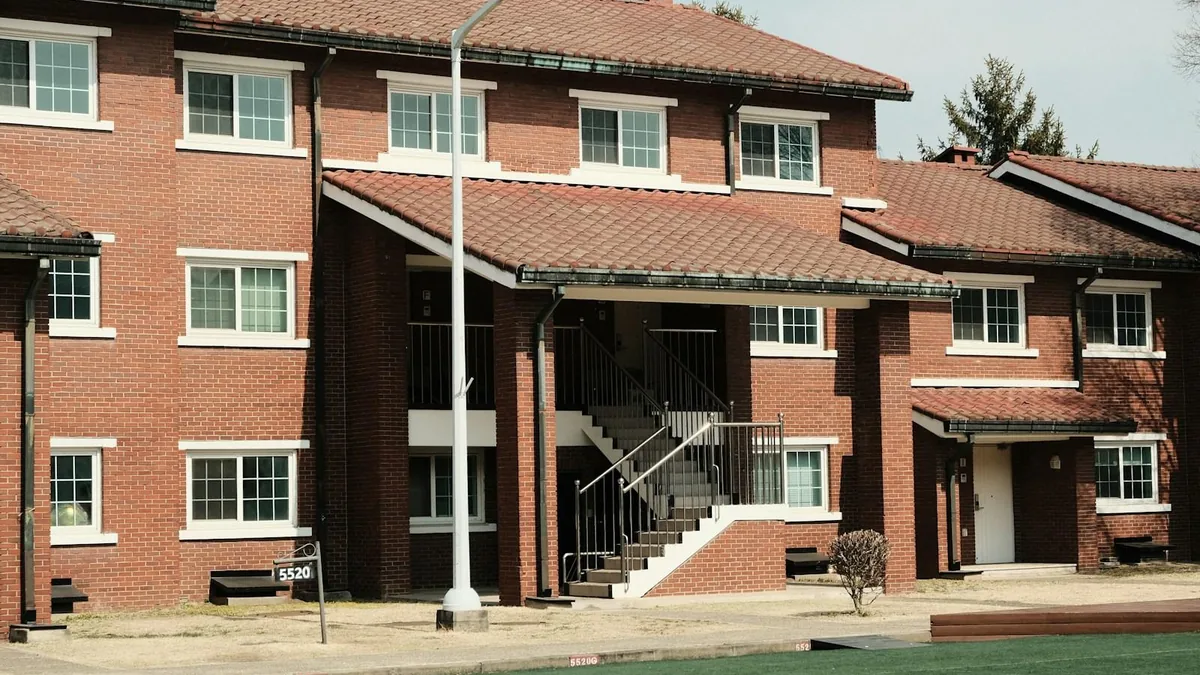
Original AI-generated editorial illustration · Rentals & BRRRR
UNDERSTAND THE WHOLE SUBJECT
Rentals, BRRRR & Long-Term Assets
Rental investing is an operating business supported by real estate. The property must remain usable, income must be collected, repairs must be funded, records must be kept, and residents must receive lawful, consistent treatment. Financing and appreciation may influence returns, but neither replaces competent ownership. This collection begins with the ordinary demands that make a long hold possible.
BRRRR describes a sequence commonly summarized as buy, rehabilitate, rent, refinance, and repeat. Each stage has its own evidence requirements and failure modes. The sequence is a planning framework rather than a promise that all invested cash returns or that another lender will approve the next step. Evaluate the property as a durable rental before relying on capital recycling.
Gross rent minus the mortgage is not cash flow. Build an operating model that accounts for vacancy, maintenance, replacement reserves, and the cost of staying liquid.
Convert asking rents into comparable lease economics, support meaningful adjustments, and build a rent range that respects condition, timing, and uncertainty.
Intermediate10 min read
A DEEPER EXPLANATION
Read the subject. Understand the decisions.
Follow the concepts from first principles to a practical working process. All scenarios are illustrative; verify facts and professional requirements for your own circumstances.
Define the resident, property, and service you can support
Start with the actual housing product: location, layout, accessibility, condition, utilities, parking, maintenance needs, and lawful use. Investigate demand with supportable rental comparisons and local professional input rather than assuming any inexpensive house will attract stable occupancy. A property that looks cheap can have a difficult service model if systems are unreliable, access is poor, or the management team cannot respond promptly.
Decide how the property will be managed before acquisition. Identify who handles leasing, routine communication, emergencies, vendors, bookkeeping, and compliance questions. Follow applicable fair-housing and landlord-tenant requirements with qualified local guidance; federal HUD resources provide a starting point rather than a complete local rulebook. Evaluate applicants through consistent, lawful processes. The operating plan should be capable of treating residents fairly while protecting the physical asset and financial records.
Translate rent into operating capacity
Scheduled rent is the amount expected under full collection assumptions. Effective income reflects vacancy, concessions, and collection loss. Operating expenses include the recurring costs of keeping the property available and managed. State your definition of net operating income so readers understand whether reserves or other items are shown separately. Financing payments and income-tax calculations require separate treatment rather than being blended invisibly into property operations.
An invented property with $27,600 scheduled annual rent and $1,600 vacancy and collection allowance has $26,000 effective income. If recurring operating expenses total $10,400, modeled NOI is $15,600. With $11,400 debt service and a separately deducted $2,400 replacement reserve, illustrative cash before income taxes is $1,800 annually. These figures are not market benchmarks. They show why gross rent and the mortgage payment alone do not describe spendable cash.
Rehabilitate for durability and verified demand
Rental rehabilitation should distinguish safety and habitability needs, system reliability, functional improvements, cosmetic choices, and optional upgrades. Ask whether an improvement changes supportable rent, reduces expected maintenance, or addresses a genuine operational problem. A finish that photographs well may add little economic value if its replacement cost is high or it does not fit the property. Use a scope with quantities, specifications, exclusions, and responsibility for permits and inspections.
Sequence work around dependencies and leasing readiness. Flooring installed before a leaking system is repaired can create rework. Marketing an availability date before critical inspections are resolved can produce avoidable disruption. Keep initial rehabilitation separate from recurring maintenance and future replacement reserves so the model does not double-count or omit work. Inspect completed work through appropriate qualified people and preserve warranties, invoices, and component information for future management.
Treat lease-up as a distinct cash period
The interval between acquisition and stable collections can consume more cash than the annual model suggests. Include construction, utilities, insurance suited to vacancy and renovation, financing payments, marketing, management setup, and the possibility of a longer leasing period. A monthly vacancy allowance in a stabilized model does not automatically fund this initial period. Identify which expenses arrive before the first rent payment and how they will be paid.
Confirm that the property can legally and safely be occupied, and that leases, deposit handling, notices, and screening procedures receive appropriate local review. Deposits may carry restrictions and should not be counted as unrestricted investor reserves. Establish a move-in documentation process and reliable maintenance reporting. A strong acquisition becomes a weak rental if the transition into occupancy is improvised or if the investor distributes cash before stabilization costs are understood.
Model the refinance as a new decision
Refinancing depends on the lender's rules, valuation, property condition, income analysis, ownership structure, borrower qualifications, loan terms, and timing. A projected finished value is not a loan approval. Ask potential lenders about relevant requirements early, then verify the actual terms and conditions before relying on proceeds. Keep costs, payoff balances, reserves, and any cash needed at closing visible in the model.
For an invented example, suppose total project cash and acquisition funding invested in the property equals $210,000 before refinancing. A hypothetical lender permits a new $180,000 loan, and refinancing costs plus other required deductions total $6,000. Net proceeds available against that invested amount are $174,000, leaving $36,000 of capital in the project. If a prior loan must be repaid, allocate proceeds to that payoff first and reconcile actual investor cash separately. Avoid calling gross loan proceeds cash returned to the owner.
Evaluate retained capital and the property after refinancing
Retained capital is not inherently a failure. The question is whether the remaining investment produces an acceptable combination of cash flow, risk, management demands, and long-term exposure. A property can remain worthwhile even when less cash returns than hoped. Conversely, a refinance that returns substantial cash can create excessive debt service or eliminate resilience. Assess the post-refinance operation independently of enthusiasm about recycling funds.
In the prior example, use the actual new loan payment to rebuild the rental forecast. Test lower collected rent, increased insurance, a large repair, and a period without distributions. Ask whether you can keep the asset if another loan is unavailable or a sale is unattractive. Do not justify a thin operating margin by assuming future appreciation. If refinancing leaves the property unable to support ordinary ownership costs, reconsider leverage or the original acquisition economics.
Reserve for components and protect portfolio liquidity
A property reserve plan should reflect condition and timing. List the roof, major mechanical systems, exterior, plumbing, appliances, and other significant components, then obtain property-specific advice and estimates where useful. A roof expected to need attention soon requires a different initial cash plan from a recently verified replacement. Averaging a future cost into a small monthly contribution does not provide the cash if the work happens next month.
Maintain both property-level and portfolio-level views. Several properties can need work at once, particularly if they share age, condition, weather exposure, or contractors. Avoid counting the same bank balance as the full reserve for every property. Distinguish committed cash, tenant-related funds, unrestricted cash, and unapproved credit. Distributions should follow a review of near-term obligations and downside needs rather than simply equal the current checking balance.
Repeat only when operations can absorb another asset
Before repeating, review the previous project's actual acquisition cost, rehabilitation variance, lease-up time, refinance result, maintenance burden, and record quality. Identify which assumptions were wrong and whether the operation has corrected them. Adding another property while unresolved work accumulates can magnify both financial and service problems. Growth is a decision about capacity, not a mandatory final stage of a slogan.
Create a repeat gate: stable operations, reconciled accounts, adequate reserves, available management attention, a credible financing pathway, and no unresolved critical compliance or condition issue. Connect this collection with capital-risk planning for aggregate cash exposure, deal analysis for comparable opportunities, and research for preserved evidence. A slower acquisition pace can be the rational choice when it protects existing residents, assets, and the investor's ability to perform obligations.
PUT IT INTO PRACTICE
Underwrite the entire rental lifecycle
Choose an invented rental and create acquisition, rehabilitation, lease-up, and stabilized operating budgets.
Prepare a component reserve list tied to condition and estimated timing.
Model a refinance with costs, required payoffs, and lower-than-expected proceeds.
Recalculate cash flow using the proposed new debt service.
Write a repeat gate that protects existing operations before another acquisition.
Your deliverable: A lifecycle cash schedule, post-refinance operating forecast, reserve plan, and written repeat-or-pause decision.
Is BRRRR successful only if all of my cash comes back?
No. Cash returned is one output, while the quality of the remaining rental and the risk of its debt are separate outputs. Evaluate the actual capital still invested, recurring cash demands, management requirements, and downside resilience. A transaction that returns less capital than expected may remain acceptable; one that returns everything may still be fragile. Decide using the full post-refinance model rather than a single milestone.
Should I self-manage to improve projected cash flow?
Compare your actual capacity, skill, response availability, and the economic value of your time. Show both cash expenses and a management-cost assumption so the property can be compared consistently with a professionally managed alternative. Self-management does not remove legal duties or the need for reliable systems. If the model works only because no one is compensated for substantial work, recognize that limit before scaling.
How should I think about appreciation and tax benefits?
Keep them separate from the operating cash forecast. Appreciation is uncertain and may not produce spendable cash when needed. Tax treatment depends on detailed rules and individual facts and belongs with a qualified tax professional. Neither assumption should be used casually to offset a recurring inability to pay operating obligations. Preserve good records so professional analysis can be accurate without confusing tax calculations with liquidity.
Reviewed as a federal fair-housing starting point. Property operations also require review of applicable state and local requirements.
This collection is general education, not individualized legal, financial, lending, investment, or tax advice. Worked examples are hypothetical. Images are conceptual illustrations and do not depict academy transactions, clients, or results.
EXPLORE THE COMPLETE COLLECTION
Go deeper, guide by guide.
Search the collection, choose your level, or save a guide for later.
Convert asking rents into comparable lease economics, support meaningful adjustments, and build a rent range that respects condition, timing, and uncertainty.
Gross rent minus the mortgage is not cash flow. Build an operating model that accounts for vacancy, maintenance, replacement reserves, and the cost of staying liquid.

 Pillar guide